
Industry vs Nature


Who would have thought, just two months after I returned from my photo trip to the Great Bear Rainforest (GBR or Great Bear) that this amazing and wonderful place would come under threat yet again?
Just a few weeks ago, in Terrace, British Columbia (BC), just twenty miles north of the growing industrial city of Kitimat where our boat was docked, Canadian Prime Minister Mark Carney announced a new pipeline agreement with Alberta to ship bitumen (distilled crude oil) from the interior to BC’s Coast. There is as of yet no company interested in this, no route has been determined, and local first nations, the BC government, and environmental nonprofits have not been included in the discussion – just a promise to fast track licensing and environmental review in the future.
Regardless of that final route, fast tracking another pipeline through or anywhere near this area will increase potential devastating impacts on Indigenous nations, clean water, irreplaceable marine ecosystems, salmon, whales, bears and wolves. Major oil spills along the BC Coast in 2006, 2007, 2015 and 2016 led to the 2019 Oil Tanker Moratorium Act that bans large oil (LNG is excluded) tankers from docking, loading, or unloading anywhere from the Canada-U.S. border to the north of Prince Rupert. The purpose is to ensure long-term protection of this unique and remote region from catastrophic spills. The new agreement accepts if (when) the pipeline is approved it will make “an appropriate adjustment to the Oil Tanker Moratorium Act.”
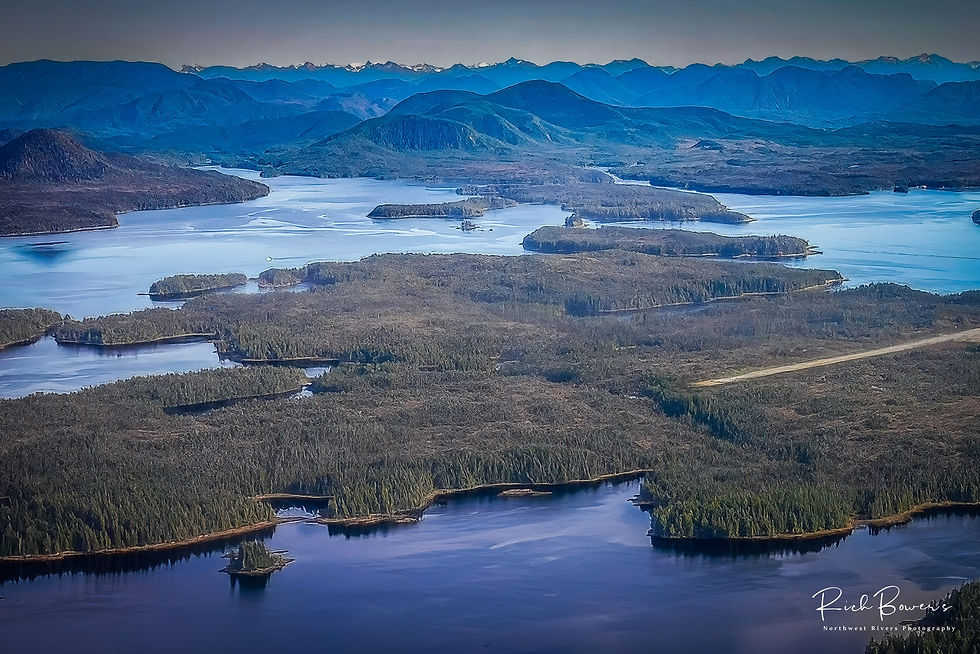
If you have been reading my posts, you know this area is filled with tiny islands, fjords, forests, magnificent mountain ranges, rivers, few people, extensive wildlife, and an extremely rugged and beautiful coastline. But this land has consistently, time after time, come under threat from its very location – smack dab between oil and gas production to the east, and coastal shipping lanes to the west.
The never-ending struggle, balancing our irreplaceable natural resources with extractive industries! Beauty, health and well-being for all species vs. money, the economy, jobs and (on both ends of that discussion) … the future. And it seems, and history validates, that the areas of the greatest abundance most always offer both beauty and profit --think Escalante in the Southwest, Alaska’s North Slope in the Arctic -- closer to home the fight over salmon and power on the Columbia River, and now (again) the Great Bear.
With nearly forty years of conservation work behind me (and now as a nature and wildlife photographer) it is pretty clear where my loyalties lie. However, I try to balance the issues when I can. But for some issues, and places close to my heart like the Great Bear, the answer must always be a flat NO!

I love the Great Bear area and all of its flora and fauna, I understand the interconnectedness of nature, and I can clearly see how the damage from a pipeline, or an oil or coal spill off the BC coast, would harm this special area and destroy the waters and wildlife that make this a unique and unmatched place on this earth. So, for me, NO to any discussion on another pipeline through or near the Great Bear.

Having just been up there, let me set the scene. Chances are, as you are driving to the BC coast, you haven’t seen a lot of civilization! Mostly charming small communities, farmland, forests, and those mountains and rivers mentioned above. In late September, my wife and I found ourselves (happily) on that drive, and once in the Skeena River Valley we turned left and headed to Kitimat, the northern access to the Great Bear.

Kitimat was a shock after so many days of open land. The City sits at the head of the Douglas Channel and describes itself as "a marvel of nature and industry." We were happy to be there, with plenty of beautiful areas, and we met wonderful, friendly residents. But it is impossible not to notice how the LNG and aluminum industrial plants (including the just completed, LNG Canada facility – the largest energy investment [$40 billion] in Canadian history) and miles of barbed wire fencing have cut into and pushed nature into the far background.
I understand the need for power, for industry and its importance to the future, including the future of Kitimat. It is good to see how this area is trying to balance competing resources. And since I don’t live there (or in Canada), Kitimat most probably, validly, and understandably doesn’t care what I think!

But spending time there just drove home how incompatible nature and industry really are. I would remain silent on this, but the Great Bear border lies right there. And now we have the threat of a new pipeline as well as a threat to the moratorium that is one of the strongest protections for this land of spirit bears, coastal wolves, whales and more.
While Steph and I were on our trip we stopped by the Pacific Whale Center located within Gitga’at First Nations territory, where researchers were already worried about tanker traffic along BC’s North Coast waters. This was long before this most recent proposal.

But let’s step back a bit and try to bring the new proposed pipeline closer to home. I am sure my neighbors here in the US might think the Great Bear is a long way off, in another country, that this agreement certainly will not affect them, and that they have enough environmental drama here in the US right now (like new national park passes with face shots)!
But in plumber’s terms, everything flows downhill and the Salish Sea is the southern interconnected and downhill neighbor to the Great Bear and the Great Bear Sea (north of Vancouver Island to the BC/Alaska border).
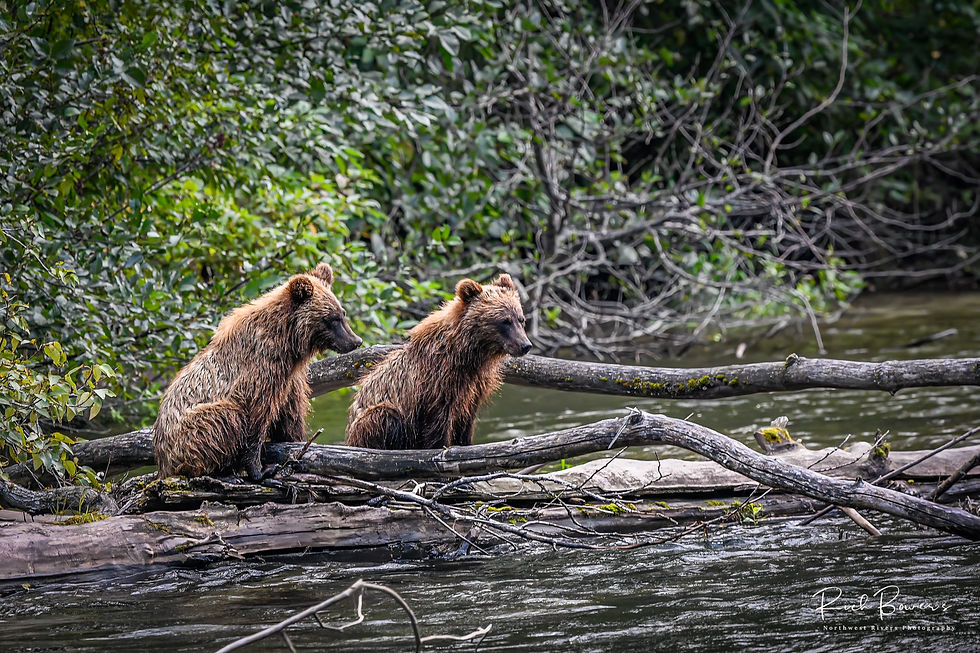
Looking at the history of oil spills, they are nearly impossible to contain with studies finding that with large offshore spills, only 2% to 6% of the oil is recovered. The 1989 Exon Valdez spill affected more than 1,300 miles of shoreline. Not exactly comparable due to the complexity of weather, tides, and navigating the ins and outs of the Inside Passage, but Bellingham is less than 445 nautical miles from Prince Rupert, generally considered the northern boundary of the Great Bear. Other, older, and broader studies (not limited to the NW coast) found that coastal pipelines, marine terminals and industrial facilities were the sources of sixty-six percent of oil spilled between 1990 and 1999. So a spill near the Great Bear would be devastating up there, and would almost assuredly affect the water quality, salmon cycles and health of the southern resident killer whales that call both the Salish and Great Bear Seas home.
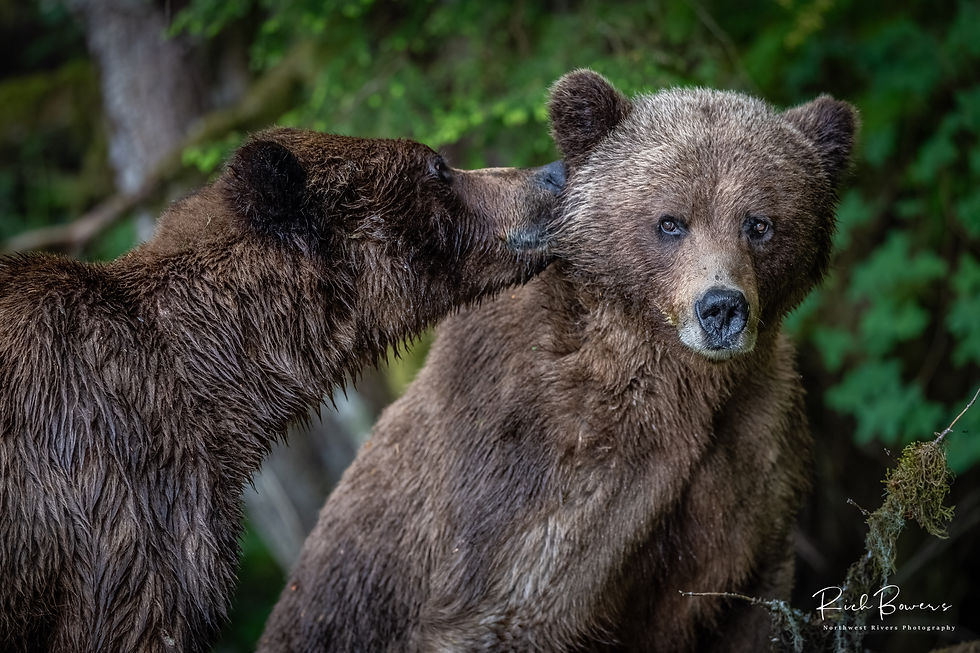
For those living in Bellingham, think back to the trauma of 1999 with the Olympic Pipeline (gasoline) tragedy on Whatcom Creek and to 2011 when the Gateway Pacific Terminal was proposed at Cherry Point (defeated when it was determined this would increase spills). One disaster and one almost disaster that we should hope would never happen anywhere else, including somewhere as special as the Great Bear.
I hope you will follow this issue, and my future correspondence on this, and, if possible, help defeat this threat to one of the earth’s most beautiful areas.
Endnotes:
Below is my electronic letter to Canadian Prime Minister Mark Carney.
Rich Bowers
Northwest Rivers Photography
830 Reveille Street, Bellingham, WA. 98229-8804
Submitted electronically at www.pm.gc.ca/en/connect/contact
December 9, 2025
RE: Concerns about the Energy MOU and Pipeline from Alberta to the BC Coast,
U.S. Resident
The Right Honorable Mark Carney, Prime Minister of Canada
I am a resident of Bellingham WA, but I try to visit British Columbia’s wild coastal areas, especially the Great Bear Rainforest and Great Bear Sea, every chance I can. Why? Because for me it is one of earth’s most beautiful and one of the world’s last truly protected wild areas. The recently signed MOU and possible pipeline (for which no route has yet been determined) prompts deep and historical anxiety for anyone that loves, visits, or lives in this area.
The twenty-seven distinct First Nations that call the Great Bear region their home, along with British Columbia and local nonprofits, have been excluded from discussion and all have weighed in to oppose this. But it affects so many more, including tourists (and photographers) from around the world. Recent reporting lists the GDP for just bear viewing in the Great Bear at $15 million.
How will this proposed bitumen (distilled crude oil) pipeline potentially affect:
· One of the richest marine ecosystems in the world and the just signed (2024) Great Bear Sea Project Finance for Permanence (https://www.canada.ca/en/fisheries-oceans/news/2024/06/great-bear-sea-project-finance-for-permanence.html(PFP))?
· The 2016 Great Bear Rainforest Agreement that blends Indigenous knowledge, science, and sustainable local economies?
· The millions invested by British Columbia and others ($335 million investment just on the PFP) on coastal conservation, ecological monitoring, habitat restoration, and stewardship?
· Protection for Spirit, black and grizzly bears, coastal wolves, southern killer whales, humpbacks, fin, and other species of whales?
· Protection of the ecological, cultural and spiritual values of wild pacific salmon, and the economic contribution from salmon processing, exports, and sportfishing to the region – estimated (https://www.bcsalmon.ca/markets-value) to be upwards of $150 to $250 million in 2012 value)?
· The 2019 moratorium on tanker traffic that protects both Canadian waters as well as Alaskan waters and the adjacent and interconnected Salish Sea here in the U.S.?
There are very few pipeline routes that would not directly impact the Great Bear Rainforest, and none that will not threaten and impact the Great Bear Sea and both Canadian and U.S. people in and near the Salish Sea. I urge you, with input from British Columbia, First Nations, and important conservation and ecological nonprofits, to rethink this pipeline, and to find another way to increase Canadian prosperity without potentially destroying this amazing, unique coastal ecosystem and community.
Sincerely,
Rich Bowers
Richard J. Bowers, Northwest Rivers Photography



Comments